

How Incorrect AC Component Matching Impacts Compressor Life
In automotive air conditioning, the compressor is often treated as the hero of the system. When cooling performance drops or fails completely, it is usually the first component to get blamed and replaced. But in many cases, the compressor itself is not the original problem. The real issue starts much earlier, with incorrect AC component matching.
A compressor does not work in isolation. It operates as part of a carefully balanced network of parts designed to function together under specific pressure, temperature, and load conditions. When even one component is mismatched, the stress placed on the system increases, and the compressor pays the price.
Why Component Compatibility Matters?
Every automotive AC system is engineered with tight tolerances. Condensers, expansion valves, evaporators, and refrigerants are selected to regulate pressure flow and heat exchange precisely. When a component with different specifications is introduced, the balance is disrupted.
For example, a condenser with inadequate heat dissipation can cause excessively high discharge pressure. An expansion valve that does not regulate flow correctly can lead to liquid refrigerant returning to the compressor. Over time, these issues create abnormal operating conditions that reduce efficiency and accelerate wear.
This is where incorrect AC component matching becomes a silent but costly problem. The system may still cool temporarily, giving the illusion that everything is working fine, while internal damage is already underway.
How Mismatch Shortens Compressor Life?
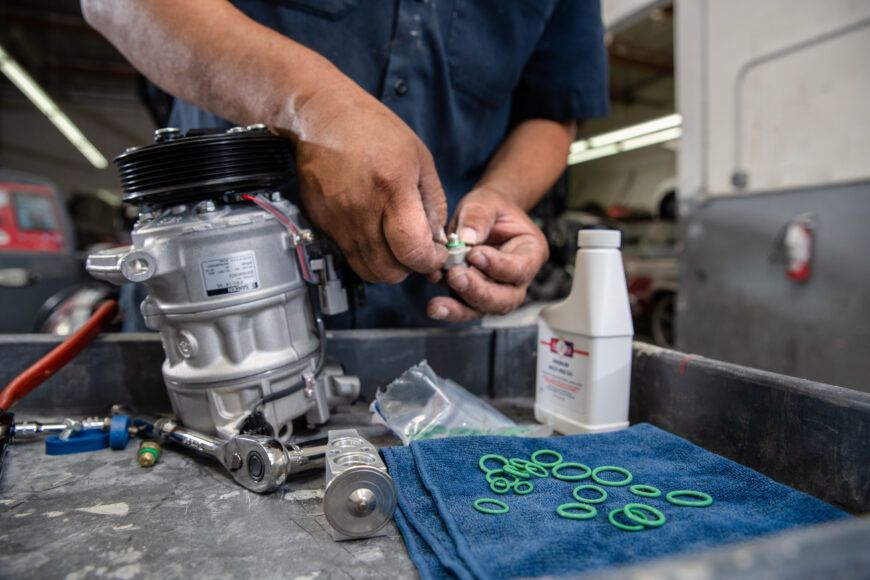
The car AC compressor is designed to compress refrigerant gas, not liquid. When mismatched components cause improper refrigerant flow, liquid slugging can occur. This damages internal valves, pistons, and seals, often leading to sudden failure.
Pressure imbalance is another common consequence. If suction pressure is too low or discharge pressure is too high, the compressor has to work harder than intended. This results in overheating, oil breakdown, and loss of lubrication. Once lubrication fails, internal friction increases dramatically, shortening the compressor’s lifespan.
Electrical overload is also a risk. Excessive mechanical resistance can force the compressor clutch and motor to draw higher current, leading to electrical failures that are often misdiagnosed as manufacturing defects.
The Ripple Effect of One Wrong Part:
What makes incorrect matching particularly dangerous is how one wrong part affects the entire automotive AC system. A low-quality receiver drier can release moisture into the system, causing corrosion and acid formation. A poorly sized evaporator can reduce cooling efficiency, forcing the compressor to run longer cycles than necessary.
These issues rarely appear immediately. Instead, cooling performance slowly declines, noise increases, and eventually the car AC compressor fails prematurely. At that point, replacing the compressor alone will not fix the root cause, and the new unit is likely to fail as well.
Why This Matters for Distributors and Workshops:
For distributors, component compatibility is not just a technical concern; it is a trust issue. Supplying parts that “fit” but do not truly match system requirements leads to comebacks, warranty claims, and damaged credibility.
Workshops also face hidden costs. Replacing compressors without addressing underlying mismatches results in repeat repairs, frustrated customers, and lost time. Educating technicians and customers about correct pairing of components can significantly reduce these failures.
Building Systems, not Just Selling Parts:
Long compressor life depends on viewing air conditioning as a system, not a collection of individual parts. Proper flushing after failures, correct oil type and quantity, and verified compatibility across all components are essential steps.
Incorrect matching does not usually cause immediate breakdowns. Instead, it quietly erodes reliability until failure becomes inevitable. Understanding and respecting system balance is one of the most effective ways to protect performance, reduce costs, and extend compressor life.
When the right components work together, the system runs smoother, lasts longer, and delivers consistent cooling without unnecessary strain.
