




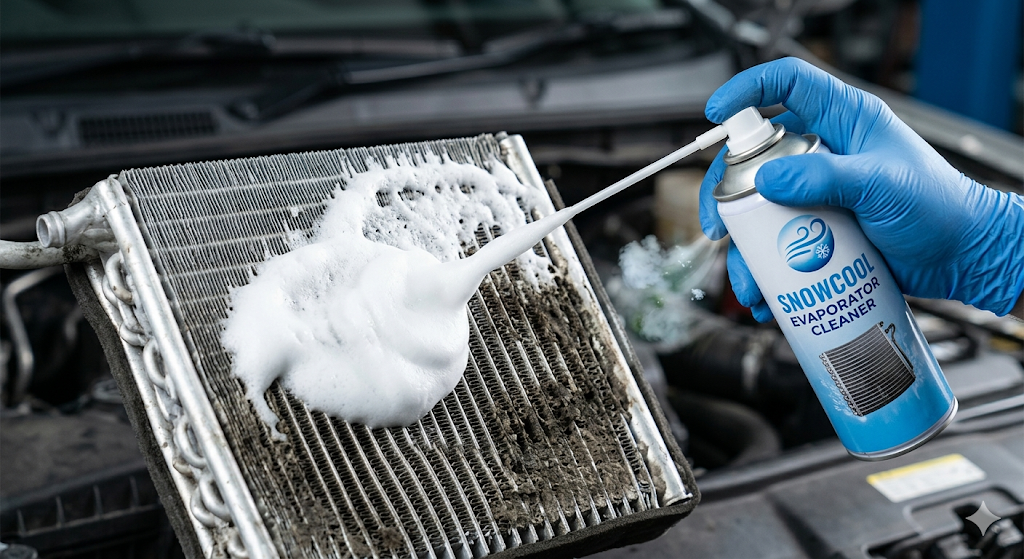
Why your Vents Smell like Mildew and How to Disinfect the Evaporator Coil
We’ve all been there. It’s a blistering afternoon, you hop into your car, crank the AC to max, and instead of a refreshing breeze, you get hit in the face with a smell that can only be described as "wet gym socks" or "abandoned basement." It’s frustrating, a bit embarrassing if you have passengers, and honestly, it makes the drive pretty miserable.
But here’s the thing: that smell isn’t just an annoyance; it’s a sign that your cooling system is hosting a science experiment. Specifically, your evaporator coil has become a breeding ground for mold and bacteria.
Why Does the AC Smell So Bad?
The evaporator is the part of your AC system that actually gets cold. As warm air from the cabin passes over the freezing coils, moisture in the air condenses into water droplets, just like a cold soda can on a humid day. In a perfect world, this water drains out through a tube under your car.
However, in our dusty, humid environment, moisture gets trapped. Dust, pollen, and road grime mix with the water to create a sludge. When you turn off your car, that dark, damp, and warm environment is exactly where mildew grows. If you don’t stay on top of car ac evaporator coil cleaning, that buildup just gets thicker and smellier every season.
Spotting Trouble Early: Beyond the Smell:
While the odor is the most obvious sign, it’s not the only thing that can go wrong with this component. You also need to keep an eye out for car ac evaporator leak symptoms. If you notice that your AC isn’t cooling as well as it used to, or if you hear a faint “hissing” sound coming from the dashboard when the system is off, you might have a pinhole leak. Refrigerant leaks are common in older units where corrosion has set in due to trapped moisture.
Another one of the major car ac evaporator leak symptoms is a greasy film on the inside of your windshield that won’t go away with a simple glass cleaner. This is usually atomized refrigerant oil settling on the glass. If you are seeing these signs alongside the smell, a simple cleaning might not be enough, you might be looking at a replacement.
How to Fix It: The DIY "No-Dismantle" Method:
Most people dread AC work because they think the entire dashboard has to come apart. That’s a nightmare scenario that takes days and never quite goes back together without rattles. The good news is that for basic hygiene, you can learn how to clean car ac evaporator without removing the whole assembly.
Here is the most effective human-friendly way to do it:
1. The Foam Injection Method:
You can buy specialized “AC Coil Cleaner” foam cans. These usually come with a long, flexible tube.
- Locate the Drain Tube: Find where your AC drips water under the car.
- Inject the Foam: Slide the tube up into the drain hole and empty the can. The foam will expand upward, coating the coils.
- Let it Dwell: Let it sit for 15–20 minutes. As the foam turns back into liquid, it pulls the dirt and mold out through the drain.
This is the gold standard for how to clean car ac evaporator without removing the unit because it reaches the back side of the fins where the gunk usually hides.
2. The Intake Spray Method:
If you can’t get under the car, you can go through the cabin filter housing.
- Remove your cabin air filter (usually located behind the glovebox).
- With the fan on a low setting, spray a disinfectant cleaner directly into the slot where the air gets sucked in.
- The fan will carry the mist directly onto the evaporator.
Regularly performing car ac evaporator coil cleaning using these methods once or twice a year will significantly extend the life of your system and keep the air smelling crisp.
Preventing the Funk:
If you want to stop the smell from coming back, you have to change your habits. About two minutes before you reach your destination, turn off the “AC” button but keep the fan running on high. This blows air over the wet coils and dries them out before you park the car. It’s a simple trick, but it prevents the moisture from sitting there all night and growing mold.
When to Call in the Pros:
